
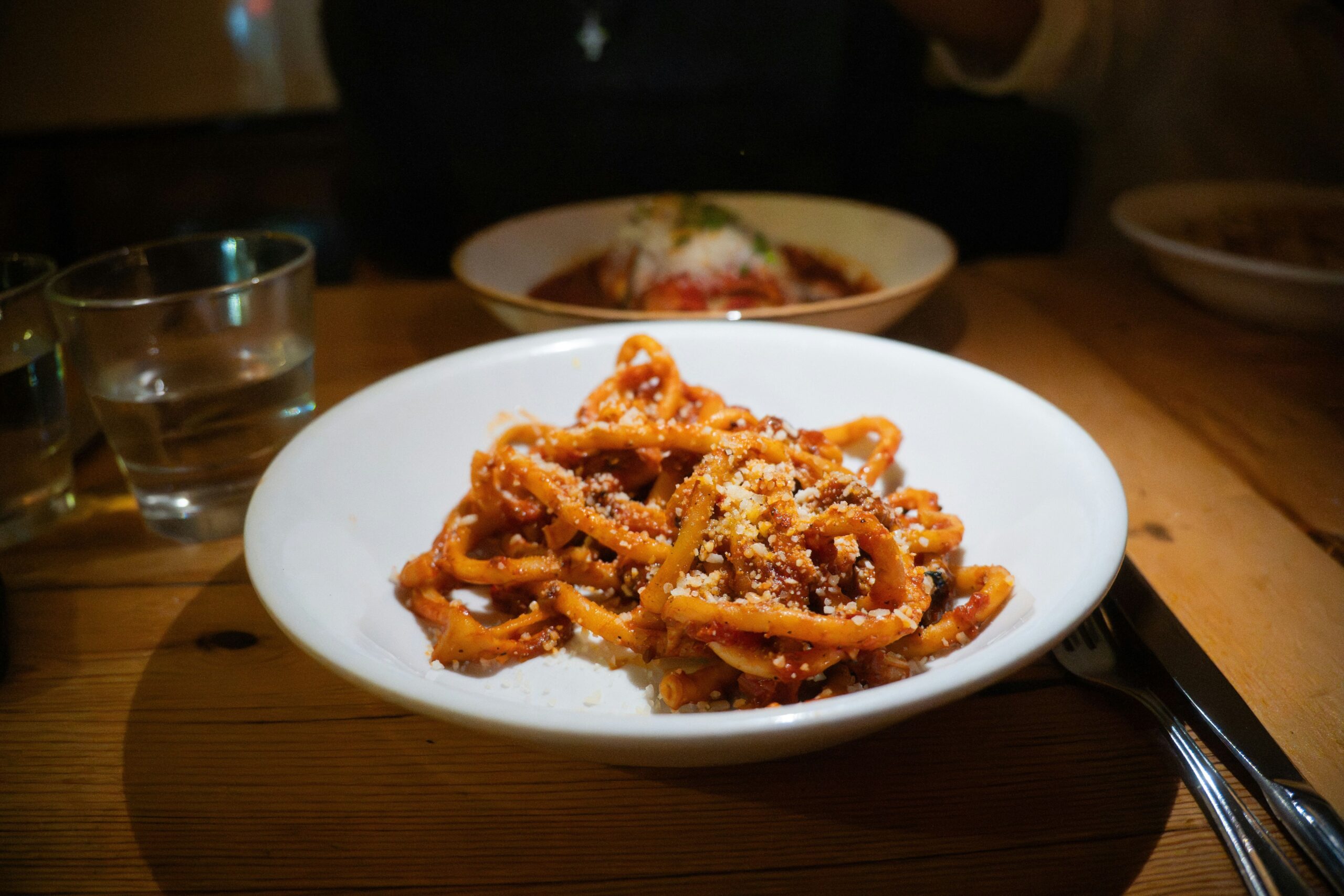
Bucatini is the pasta you choose when you want every bite to taste extra saucy. At first glance it looks like thick spaghetti, but there’s a secret running through the center: a hollow channel that pulls sauce inside the noodle. That little detail changes everything. Instead of sauce only coating the outside, bucatini delivers flavor from within, making even simple tomato sauces feel richer and more satisfying. Bucatini also has a hearty chew that holds up beautifully in bold, salty, spicy sauces—especially classic Roman-style preparations. In this Second Pasta guide, we’ll explore what makes bucatini pasta unique, how to cook it so it stays springy, and why iconic dishes like amatriciana are such a perfect match for this hollow noodle.
What Makes Bucatini Different From Spaghetti
Bucatini noodles are long, round strands like spaghetti, but thicker and hollow. That hollow center is what sets it apart. It collects sauce and keeps it trapped, so each bite feels fuller and more flavorful. This is why you’ll often see bucatinipasta described as “spaghetti with a hole,” and once you cook it, the difference is obvious.
Because it’s thicker, bucatini takes a little longer to cook than spaghetti. It also benefits from sauces with body—tomato sauces, spicy sauces, and rich, savory sauces that can cling to the outside while also flowing into the center.
How to Cook Bucatini Noodles for the Best Bite
Bucatini is at its best when it’s al dente—tender but still chewy. Overcooking can make it lose that satisfying spring, and because it’s hollow, it can soften unevenly if you’re not paying attention.
A simple method:
- Use a large pot and plenty of salted boiling water.
- Stir early and occasionally to prevent sticking.
- Taste-test near the end rather than relying only on time.
- Reserve a cup of pasta water before draining.
- Finish the pasta in the sauce for a minute or two.
Finishing in sauce matters. It helps the sauce move into the hollow center and cling to the outside, creating that “sauce everywhere” effect that makes bucatini special.
Why Bucatini Loves Tomato-Based Sauces
Bucatini shines with sauces that are smooth enough to flow into the center but thick enough to stay on the noodle. Tomato sauces hit that sweet spot. A well-reduced tomato sauce clings to the outside, while the thinner portion slips into the hollow, making each bite taste layered—like the sauce is built into the noodle.
That doesn’t mean bucatini needs a heavy sauce. Even a simple garlic-tomato sauce becomes more exciting because the pasta changes how you experience the flavor.
Bucatini All’Amatriciana: The Classic Pairing
If bucatini has a signature dish, it’s amatriciana. Bucatini all amatriciana is known for its bold, savory, slightly spicy tomato sauce and salty cured meat. The sauce is rich and punchy, and the hollow noodles capture it perfectly.
You’ll often see the dish written as bucatini amatriciana as well. Either way, the idea is the same: a Roman-inspired tomato sauce with salty depth and a little heat, clinging to and filling the bucatini.
What makes this pairing so satisfying is balance:
- Tomato brings brightness and sweetness.
- The cured meat adds salt and richness.
- Chili adds warmth and lift.
- The pasta delivers sauce inside and out.
Even if you’re making a simplified version at home, bucatini keeps the dish feeling authentic because the noodle’s shape creates that classic saucy bite.
Tips to Make Amatriciana-Style Sauces Work at Home
You don’t need a complicated ingredient list to capture the spirit of amatriciana-style flavor. The key is to build depth and keep the sauce glossy.
Helpful tips:
- Render the meat slowly to create flavorful fat.
- Cook tomato sauce long enough to reduce slightly.
- Use pasta water to emulsify and bind the sauce to the noodles.
- Add heat gradually so it stays warm and pleasant, not overpowering.
- Finish with cheese for salty richness.
That final toss—bucatini, sauce, and a splash of pasta water—creates the coating and helps sauce travel into the center of the noodles.
Other Delicious Ways to Use Bucatini Pasta
Bucatini isn’t limited to one sauce style. It’s also excellent for:
- Spicy tomato sauces with garlic and herbs
- Creamy tomato sauces (keep them glossy, not heavy)
- Butter-and-cheese sauces with black pepper
- Simple olive oil sauces with anchovy or capers
Because it’s sturdy, bucatini can handle bold, salty ingredients. It’s a great choice when you want pasta that feels substantial without needing a baked dish.
Bucatini vs Tortellini for Different Comfort Styles
Bucatini is a “sauce delivery system,” while tortellini is a stuffed comfort classic. If you’re craving big, bold sauce flavor, bucatini noodles are ideal because the sauce fills the hollow center and coats every strand. But if you want a pasta that brings its own richness, torellini-style stuffed pasta offers that cozy, filled bite—often with cheese or meat tucked inside. Think of bucatini as the perfect canvas for a strong sauce like bucatini all amatriciana, and torellini as the perfect choice when you want the pasta itself to feel like the main feature.
Conclusion
Bucatini pasta is a small shape upgrade with a big payoff. The hollow center transforms sauce from a topping into part of the noodle itself, which makes every bite taste more intense and satisfying. Whether you’re cooking a classic bucatini all amatriciana, searching for bucatini amatriciana inspiration, or simply enjoying the chewy comfort of bucatinipasta with your favorite tomato sauce, the key is the same: cook it al dente, save pasta water, and finish it in the sauce so the noodle can do its magic. And when you want a different kind of comfort—one that’s filled rather than sauced—torellini-style stuffed pasta makes a perfect counterpart in your rotation. With bucatini in your pantry, sauce lovers always win.